The Spirit of Bushido: Kendo, Kyudo, and Sado in 'The Last Samurai'
Introduction to 'The Last Samurai'
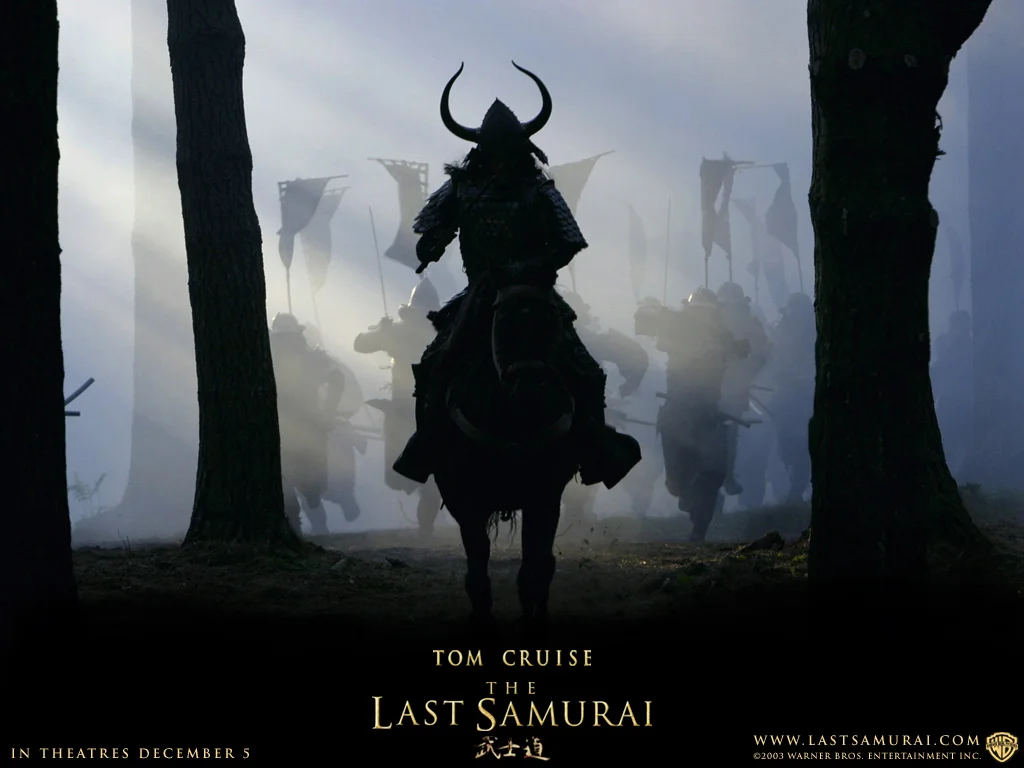
The 2003 film 'The Last Samurai' was directed by Edward Zwick, who co-wrote the screenplay with Marshall Herskovitz and John Logan. Set in Japan during the Meiji Restoration of the 1870s, the story follows an American military officer played by Tom Cruise. Originally hired by the Japanese government to suppress a samurai rebellion, he progressively absorbs the spirit of Bushido through his interactions with the samurai leader, played by Ken Watanabe.
The first 25 minutes of the film primarily depict the protagonist's initial encounters with the samurai, guiding the audience into an exploration of what Bushido truly means. The story showcases not only the collapse of the samurai class and the survival of the Bushido spirit post-Meiji Restoration, but also delves deeply into the samurai's disciplined lifestyle, such as Kendo, Kyudo, and Sado (Tea Ceremony). These practices cultivate a humble and elegant mindset. The entire movie revolves around the core values of Bushido: Righteousness, Courage, Benevolence, Respect, Sincerity, Honor, Loyalty, and Self-Control. Even though some aspects are constrained by the runtime, the rich details allow viewers to grasp the profound meaning of Bushido.
Kendo, Kyudo, and Sado in the Film
Today we explore the Bushido portrayed in the film, particularly Kendo, Kyudo, and Sado. These elements were paramount from the Sengoku period to the Shogunate era. Hosokawa Fujitaka, one of the direct disciples of Sen no Rikyu in the art of tea, once said: 'A samurai who does not know the tea ceremony should be deeply ashamed,' signifying that ignorance of Sado as a martial artist was considered a great disgrace.
Hosokawa Fujitaka's swordsmanship originated from Tsukahara Bokuden, the founder of the Kashima Shinto-ryu style. His archery was certified by Yoshida Sekka, and his mounted archery skills were learned from Takeda Nobutoyo. Besides mastering martial arts, he dabbled in arts like Waka, Renga, and Kemari, and had profound knowledge in Go, cooking, and Sarugaku. Regarded as one of the top intellectuals of his time, this illustrates that a samurai's refinement goes beyond martial arts—it encompasses learning and practicing the spirit of Bushido through various disciplines.
Kendo
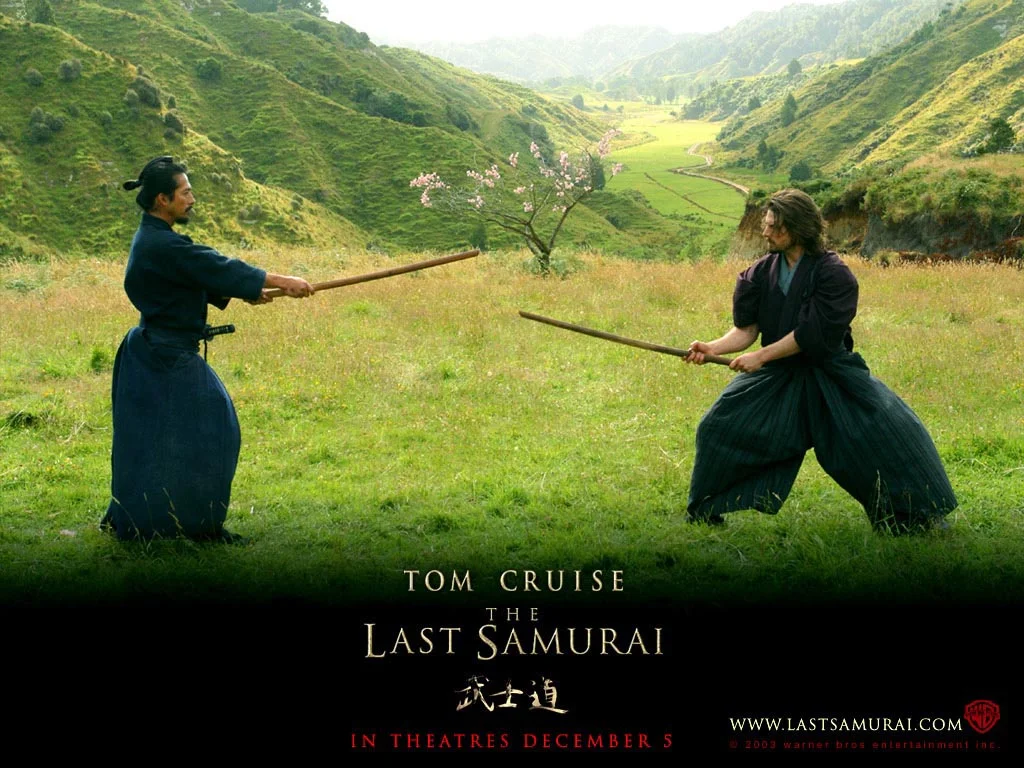
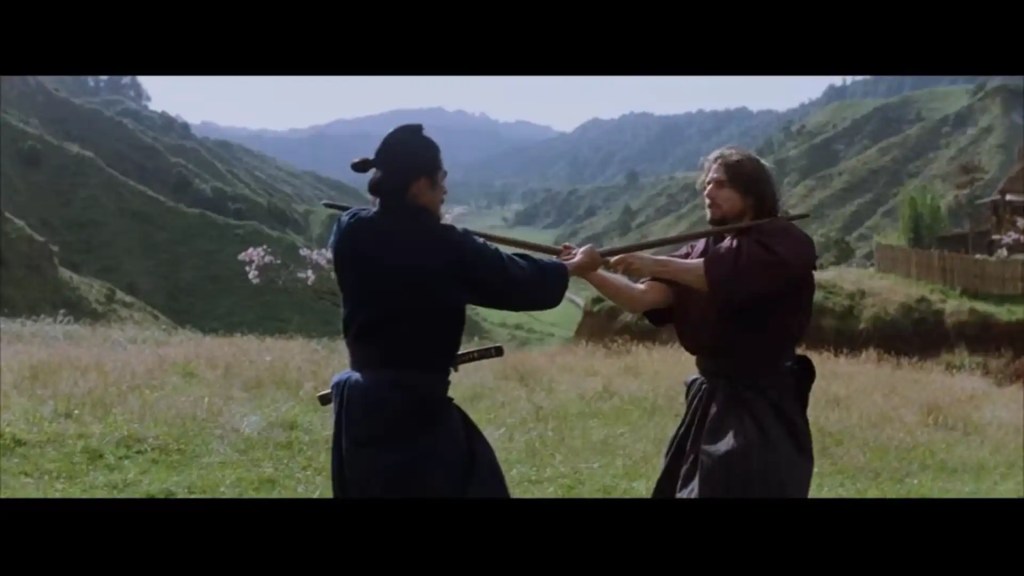
Kendo scenes are frequent in the movie, especially as Captain Algren experiences the spirit of Bushido by learning Kendo. While I have not personally practiced Kendo and cannot detail its every aspect, one can observe similarities between Kendo and Kyudo, particularly in concepts like 'Tenouchi' (the grip) and 'Zanshin' (sustained awareness).
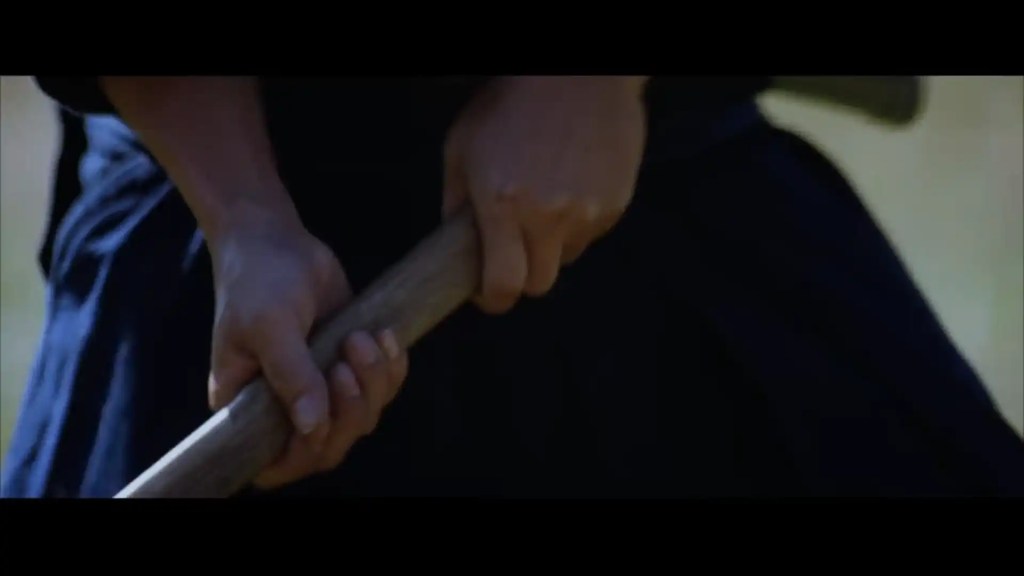
In Kendo, 'Tenouchi' refers to the correct way to grip the sword, whereas in Kyudo, it denotes the grip of the bow with the left hand. Both hold subtle differences across various schools and were historically treated as closely guarded secrets. In the film, Captain Algren is frequently distracted by his thoughts during Kendo practice. However, during his final duel with Ujio, he at last achieves inner peace and concentration. The close-up shots of their 'Tenouchi' demonstrate a relaxed, natural grip, signifying that both men have achieved the same heightened mental state.
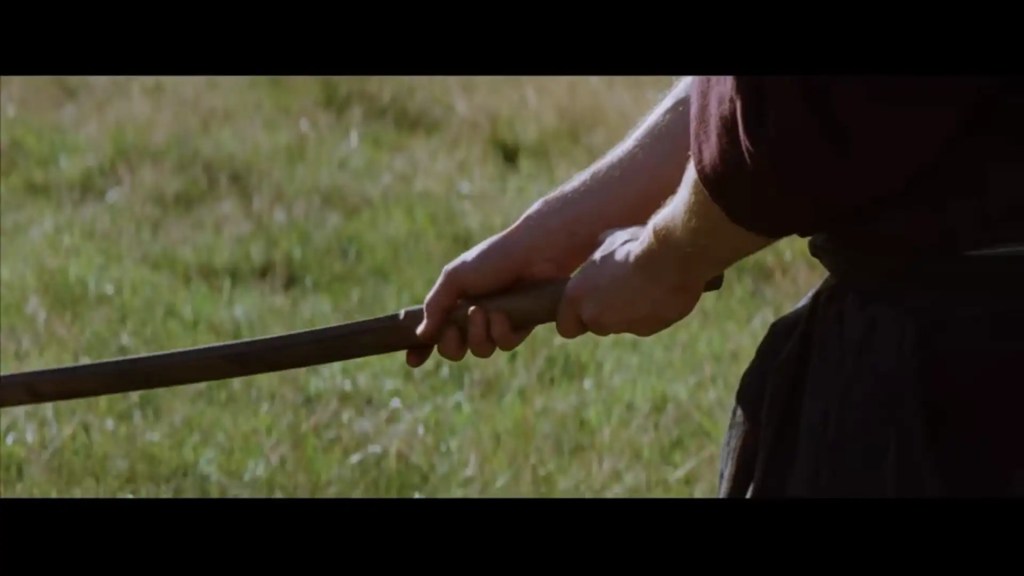
'Zanshin' is a core concept in Japanese martial arts. Prominent in Kendo, it means that even if a physical movement appears complete, the warrior must maintain alertness against sudden counter-attacks. This mentality demands that a samurai never relaxes his guard; even if the opponent seems defeated, any lapse in attention could prove fatal.
In Kendo competitions, even if a practitioner scores an 'Ippon' (a valid strike), celebrating immediately or showing signs of losing focus can result in the point being annulled due to a lack of Zanshin. This underscores the necessity of remaining intensely focused even immediately following a success.
A waka poem beautifully relates this spirit: 'Even if you pluck the mountain cherry, do not let your guard down; for a sudden storm may blow.' It reflects that even at the very moment of victory, a samurai must stay constantly vigilant and never be lured into complacency by a fleeting success.
In 'The Last Samurai', this spirit is well represented across a few scenes. For example, during Captain Algren's duel with Ujio, and in his final one-versus-three fight, we see Algren and his opponents maintaining peak vigilance after every strike. Even during tense stand-offs, their lack of complacency perfectly embodies Zanshin.
Kyudo
Moving on to archery (Kyudo) in the film, the character most frequently seen wielding a bow is Nobutada. There's a fleeting scene of him practicing alone; despite lasting only seconds, one can witness the elements of 'Kai' (the full draw), 'Hanare' (the release), 'Tenouchi', and 'Zanshin'. The concepts of 'Kai' and 'Hanare' in Kyudo are derived from Buddhist teachings, specifically 'Shoja Hitsumetsu, Esha Jori,' meaning 'all living things must die, and all who meet must part.'
Kyudo borrows this philosophy to describe how drawing the bow to 'Kai' leads to a natural, inevitable 'Hanare' (release), which practitioners strive for. Zanshin in Kyudo involves holding one's posture and maintaining focus on the target immediately after the arrow is released. Somewhat regrettably, in the movie's portrayal of this Zanshin, Nobutada's bow ends up fully inverted (string on the outside). It is puzzling why the production crew overlooked this subtle technical flaw.
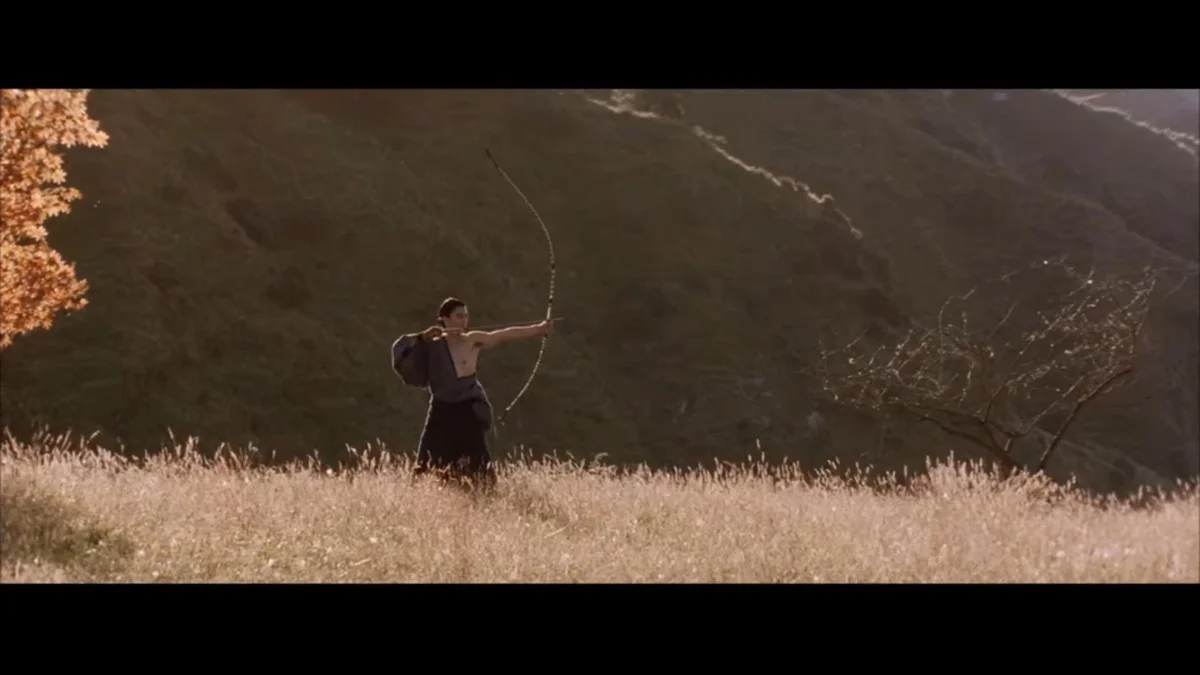
As for why he lacked 'Yugaeri' (the bow turning in the hand after release), it's uncertain whether this mechanism was necessary during the historical combat era. For instance, in modern Yabusame (horseback archery) and demonstrations by the Satsuma Heki-ryu school, complete Yugaeri is often omitted to allow for faster reloading. The film features additional archery moments—like early horseback archery and mass archer volleys during the climax—but as they don't delve into the philosophy of Kyudo, I won't elaborate on them here.
Sado (Tea Ceremony)
Let's turn to Sado (the tea ceremony). Although its screen time is barely a few seconds, Ujio performs a gesture inextricably linked to Kyudo: the 'Kiri-bishaku'. Why is it connected to archery? Because three specific ladle-handling movements in Sado trace their origins back to Kyudo. When using a Furo (portable brazier), there are three forms governed by the 'Shin-Gyo-So' principles: Oki-bishaku, Kiri-bishaku, and Hiki-bishaku.
In the film, Kiri-bishaku signifies the moment of the arrow's release—the 'Hanare' in Kyudo. It is the action of replacing the ladle after scooping hot water for the tea. Surprising as it may be, Ujio demonstrates not just Tenouchi and Zanshin in combat, but also 'Hanare' through his tea preparation. The other two actions, Oki-bishaku, resemble nocking an arrow on the bow (used when placing the ladle aside), while Hiki-bishaku mimics drawing the bow to full extension ('Kai'), used when retiring the ladle after adding cold water.
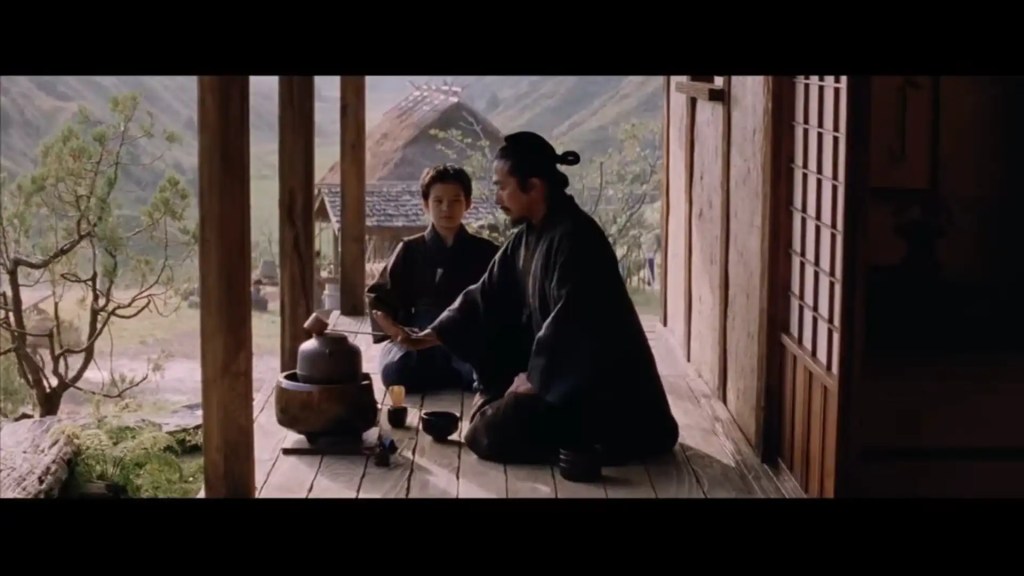
Aside from this connection to archery, Sado also embodies the spirit of Zanshin. Sen no Rikyu, the grand tea master, described the Zanshin of the tea ceremony in a poem: 'Whatever it is, when returning an object and letting your hand slip away, realize it is like parting from someone you deeply love.' This perfectly conveys the lingering emotional resonance required when an action concludes.
Brief Thoughts on 'The Last Samurai'
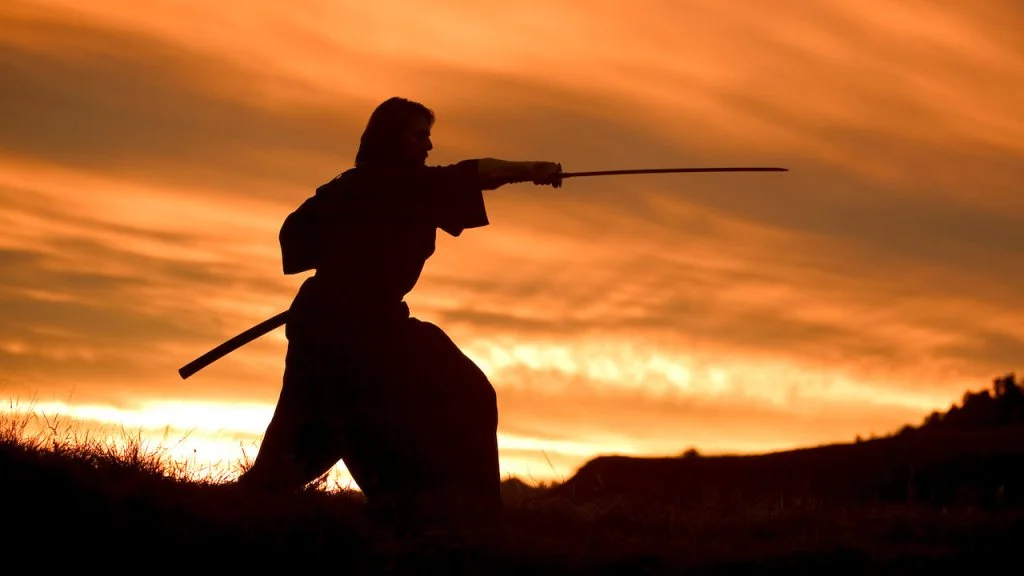
After briefly examining Kendo, Kyudo, and Sado within the movie, one realizes how profoundly interconnected these martial ways truly are, and how intimately they wove into the daily life of a samurai. Algren's query—'What is the spirit of the samurai? Total obedience to a moral code? Seeking inner peace? Perfecting the sword?'—goes unanswered by the film. Perhaps there is no singular answer. Much like the 'Way' intrinsic to different martial disciplines, while the training methods are remarkably similar, what each practitioner seeks and attains is ultimately personal and unique.
Therefore, in 'The Last Samurai', the spirit of Bushido isn't found merely in the grandiose battles, but deeply permeates across many details—details that might go unnoticed by those uninitiated in martial arts. If reading this article sparks an interest in pursuing a martial way, I warmly encourage you to seek out the opportunity to learn. That concludes the entirety of this piece.
📺 影片
▲ 《末代武士》預告片
▲ 《末代武士》電影片段
Start Your Kyudo Journey Today
